

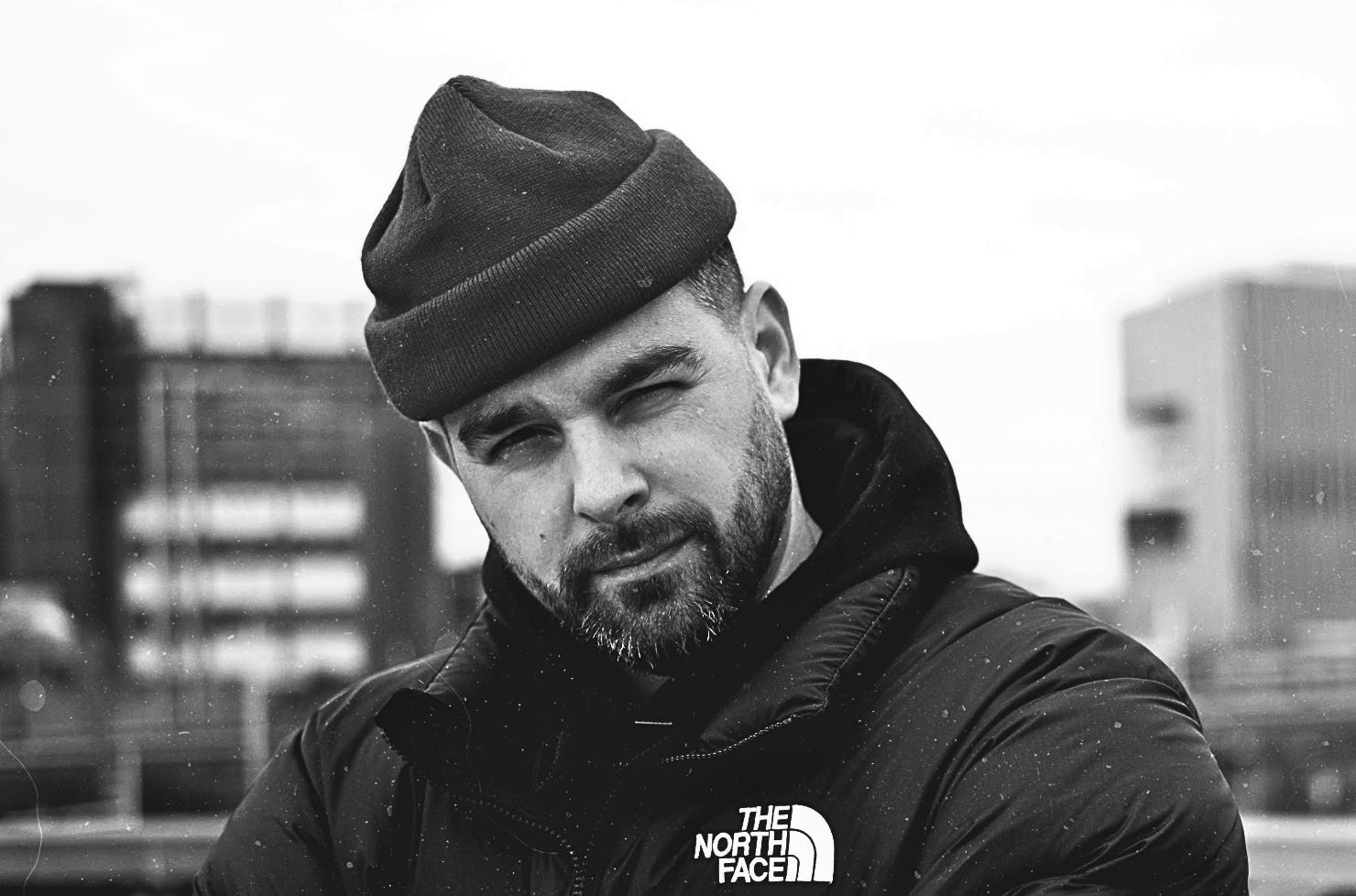
By Miquel Sinclair, founder and editor of Silver Sun
Lenzman was one of the artists who made me fall in love with drum & bass. Tracks like “Ice Cold Soul”, “Open Page” and his VIP remix of MC Conrad & Makoto’s “Golden Girl” made me feel a connection to music that I had never experienced before. They set me on a path that would eventually shape a huge part of my life and work.
Mine is only one story among many. The tributes shared since his passing have made clear how deeply his music, The North Quarter, and the community he built around them has affected people.
The News
Teije van Vliet, known professionally as Lenzman, died on the afternoon of Saturday 11 July at the age of 47. His family confirmed the news the following day in a statement shared through his Instagram account. “For three-and-a-half years he fought with so much strength, courage and love,” read the message, signed by his wife, Ashanti, and daughters, Riva and Nya.
He had been living with kidney cancer since his diagnosis in January 2023. The cancer had already spread and was incurable, but he did not speak publicly about his illness until July last year. Throughout his treatment, he continued making music and returned to DJing whenever his health allowed.
To listeners around the world, Teije was Lenzman: a Dutch producer, DJ, founder of The North Quarter, and one of the best to ever do it.
What Set His Music Apart
Lenzman’s music is easy to recognise without ever feeling confined to a formula. It has the warmth of soul and jazz, and the sample-hunter’s instinct of someone who grew up listening to 90s hip-hop. You can hear where his influences came from, but it never felt like he was only reproducing them.
“Open Page” captures that balance: spacious and patient, allowing Riya’s vocal to be at the centre, not reducing it to a hook. His remix of Children of Zeus’ “Still Standing” goes further by turning a soul record into DnB without stripping away its intimacy. Lenzman described it as the point where his efforts to bring hip-hop and drum & bass together finally matched what he had imagined. His more recent collaborations with Fox, such as “Starlight” and “Golly”, were guided by that same respect for the voice at the centre of a track: the production supported the story rather than competing with it.
That instinct also ran through his two albums for Metalheadz. Looking At The Stars, his 2014 debut, brought his melodic and emotionally direct approach to the most iconic drum & bass label. Bobby, released in 2019, became more personal still. The album was named after his daughter’s stuffed toy dog, and its cover was drawn by his father. Lenzman had become a parent around a year before working on the album, and described how fatherhood led him back to memories and music from his own childhood.
It was an unusually personal foundation for a DnB album, but it suited him. His music had always made room for memory, family, and vulnerability. Even when his tunes were built for the club, their emotional focus felt like it was somewhere beyond it, in the people, histories, and relationships carried into the room.
That is what made his catalogue feel different: it never felt anonymous, it always sounded like it came from somewhere, and someone.
More Than a Sound
Lenzman’s influence on drum & bass was never just about how his own tracks sounded. It was about a point he made, in interviews and through his own catalogue, about what the genre was allowed to be.
When he launched The North Quarter in 2016, he described wanting to build a home for artists writing songs with real substance, pointing out that drum & bass, more than two decades old by then, was still often stuck lyrically in the club, describing itself rather than saying anything beyond it. He made a comparison to how hip-hop matured from DJ-led music to something MCs could use to talk about anything at all, and he thought that drum & bass deserved the same confidence.
He carried that thinking into how he talked about the genre’s history, too. In a 2021 interview, he spoke about drum & bass’s roots in Black music, the diversity of the scene he’d found when he first discovered jungle, and about his discomfort watching the audience for the genre narrow over the years, even as the tools to produce it had become more accessible than ever. It wasn’t a comfortable thing to say and it wasn’t said for effect. It came from someone who wanted to honour the artists and history that had opened the door for him.
The push for lyrical maturity and the insistence on remembering the genre’s roots opened up a space that a lot of artists making thoughtful, vocal-driven, genre-blurring music are working in today.
The World He Built Through The North Quarter
If Lenzman’s own tracks were his voice, The North Quarter was the room he built so other people could speak too.
He founded the label in 2016, naming it after the district in Leiden where he used to live, a small, personal detail that says a lot about how he approached the whole project. The first release was his own All For You EP, a ten-track collection blending drum & bass with hip-hop, featuring Redeyes and DRS. It included his “Still Standing” remix, which went on to win Best Remix at the 2016 Drum & Bass Arena Awards and set the tone for everything the label would become: melodic, soulful, and not afraid to reach outside the genre.
Over the following decade, The North Quarter grew into one of the most respected homes in DnB for artists working in that same soulful, exploratory space: Redeyes, FD, Fox, Note, Objectiv, Zero T, Satl, Echo Brown, Submorphics, Tokyo Prose and others all found a home there, and often for full, considered projects rather than one-off singles. Fox’s vocal LP for the label and Zero-T & Onj’s Kilburn Park, are the kind of records that don’t get made without a label being fully behind the artist’s vision.
Asked in 2023 what he looked for when signing someone new, Lenzman was clear that a ready-made fanbase or obvious commercial potential mattered less to him than whether the sound was bringing something different to the table. That approach was his A&R philosophy and shaped a label that never sounded like it was chasing a trend, because it wasn’t.
The evidence of what he built also came from the events. The North Quarter’s club nights started small, at The Pickle Factory, before outgrowing it and moving to Phonox, where Lenzman later described the moment he realised what he had: a sold out night where his set used only label tracks, and the crowd knew every word. That’s not something that happens to a record label. It happens to a community.
The People Around the Music
The scale of the response to Lenzman’s passing says as much about him as any of his music does.
Goldie, who signed Lenzman to Metalheadz and watched him grow from a promising young producer into a label boss in his own right, wrote:
“I’ve seen him grow over the years ..and into one of the kindest and most beautiful people you could ever meet”
Doc Scott, another Metalheadz pioneer, remembered the very beginning, recalling how Marcus Intalex had first told him:
“Hey Scotty, there’s this kid coming up that’s amazing and he’s gonna be special.”
Doc Scott followed this by saying that Lenzman had fulfilled that promise.
This kind of memory, passed between people who’d been in the scene for decades, is its own evidence of how long Lenzman had been trusted by the people around him.
That trust was visible in a different way in June, at a fundraising night held at Phonox in his honour. Sets from The North Quarter roster alongside DJ Flight, LSB, Workforce, and GLXY, raised money for Lenzman and his family after his treatment ended. Watching the response to that night from home, Lenzman wrote about how much it meant to him, and about the strange grief of knowing he’d reached the point where he wouldn’t get to see the people who showed up for him again, or experience DJing anymore.
It’s a really hard thing to read. It’s also, in its way, the clearest possible way to see what he meant to the people around him, that a community would gather like that, for one of its own, while there was still time for him to see it happen.
The Influence That Cannot Be Counted
None of what Lenzman built shows up cleanly in numbers. Streams and bookings can tell you a version of the story, but not the real one.
The real one is in the artists who had a home because The North Quarter existed, a place for drum & bass that went beyond the club. It’s in the producers who understood for the first time that drum & bass didn’t have to choose between hitting hard and meaning something. It’s in the community that formed around Phonox on North Quarter nights.
And, in a smaller way, it’s in stories like mine. I didn’t come to dance and electronic music through a straight line, and I didn’t pursue a career in music because of one producer. But Lenzman’s music was part of the beginning of that path, one of the reasons I kept discovering, kept following the thread, not knowing where it would lead. I’d guess a lot of people reading this could say something similar, about him or an artist like him. That’s what this kind of influence actually looks like. It doesn’t announce itself. It just quietly changes the course of someone’s life, long before they understand what is happening.
Lenzman’s music did that for me. The response to his passing has made it clear that I was far from the only one.