

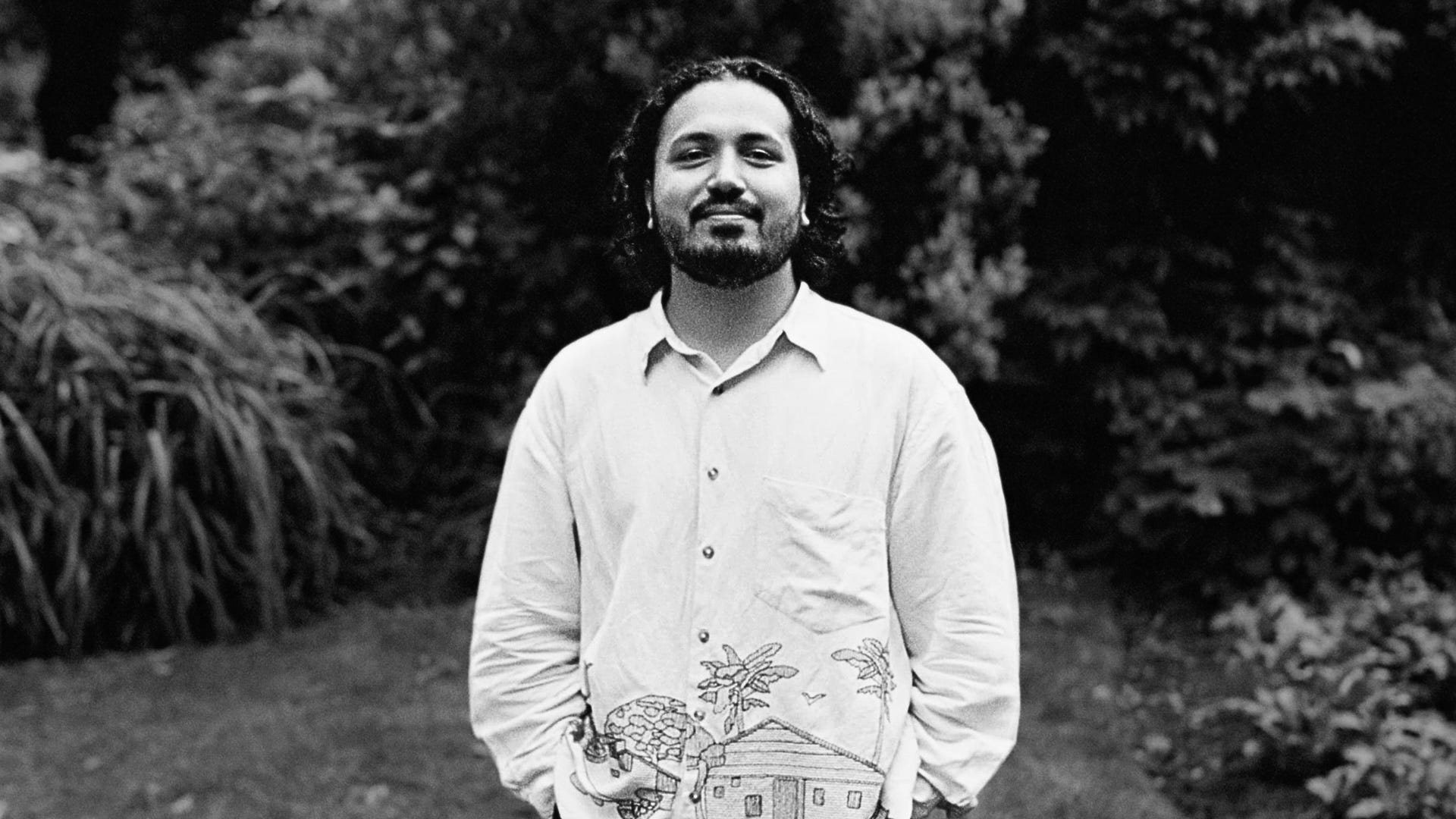
Provhat Rahman is the founder of DAYTIMERS and co-founder of Dialled In, two projects supporting South Asian music and arts. DAYTIMERS is a collective that gives DJs, musicians and other creatives opportunities to share their work and reach new audiences through events and collaborative projects. Dialled In platforms artists through festivals, events, and a record label. It also co-produced Built by Sound, an immersive installation exploring British South Asian youth culture.
A shared cultural identity doesn’t mean everyone comes from the same background or wants to make the same music. For Provhat, running a collective means paying attention to differences in class, caste and upbringing, while giving artists room to follow their own tastes.
Ahead of DAYTIMERS’ event at Palais on 20 November, we spoke to him about the work behind the collective, the artists he’s supporting through Dialled In Records, and his ideas for London’s nightlife.
DAYTIMERS
How do you make sure a shared cultural identity leaves room for different tastes and artistic directions within DAYTIMERS?
We’ve never had a defined music/genre policy, from the start. We always book people for their taste first and foremost, not how many South Asian samples they can throw in a set or how much they grew up engulfed in their specific South Asian hereditary culture.
What goes into running a collective day to day, beyond the events people see? Is there a part of it you wish more people understood?
Probably the interpersonal side. There’s so many different kinds of backgrounds and upbringings behind the people that make up the collective. That’s ultimately one of our greatest strengths but it’s also something to constantly be conscious of and sensitive to when the basis of the collective is around identity. Dealing with the nuances across South Asian ethnicities, class, caste, creative arts access whilst growing up etc. can be incredibly difficult, but it’s something I’m glad to say we’ve gotten really good at over the years.
What do you feel DAYTIMERS needs to do now that it didn’t need to do when it first began? Has anything about its growth made you rethink your approach?
A boring answer, but project management systems. When things are green, it really does just run on collective passion to build towards something and things happen through vibes and WhatsApp. That can still definitely be the case for some projects but we have our own internal system for tracking offers, voting and having your own say on what we do as a collective, to make it as open access as possible.
DAYTIMERS at Palais
What’s the story behind bringing DAYTIMERS to Palais? What made it feel like the right space?
London is experiencing a very interesting time in its nightlife journey, where there’s constant doom and gloom around the costs of running venues, less people going out, longstanding institutions shutting down - all whilst a host of new venues have been popping up all over the city. Palais is one of those spaces and it feels great to be a part of its formative years.
Rasa will be making her UK debut on the night. What drew you to her music, and how do opportunities like this fit into DAYTIMERS’ approach to connecting artists with new audiences?
An overarching theme for this night has definitely been the more left-field side of UK dance music. This sound has been rifling its way through India and Rasa has been one of the foremost flag-flyers for it. We’ve historically been a very diaspora focused collective, but the musical connection between diaspora and native South Asian artists continues to get stronger year on year so this now feels like a very natural booking for us.
“We love coming across something that feels like the first time we’ve ever seen or heard anything like it”
— Provhat Rahman
Dialled In
Dialled In brings together music, arts, and culture. How do you approach making these different elements feel connected?
The layout of the space we do the festival at is key. At The Cause you could weave through all 6 rooms in a loop so it felt super exploratory. In Dalston we had 9 venues across the high street so it felt like roaming around a small town filled with everything we’d curated.
What inspired you to develop the label side of Dialled In, and what do you want it to offer artists?
The offer to do it came from out of nowhere a bit, but once we considered it, it was the perfect next step. We had the festival, we had the industry insights arm, this was a natural third part. The aim with it is to be completely genre-agnostic in who we sign, but to ultimately work with boundary pushing artists, supporting their development.
Could you take us through a release or project that captures the label’s identity? What made it feel right for Dialled In Records, and how did you work with the artist to bring it together?
We’ve only had 3 releases so far, but already Excise Dept, the band we signed from India really encapsulates everything that we’re trying to do as a label. Completely singular in their artistic vision, sonics and direction. We love coming across something that feels like the first time we’ve ever seen or heard anything like it. Mya Mehmi, our latest signing is another example of this. There is not a single artist in the world that inhabits the space that she does.
“It pushed parts of the project’s score into much darker, uncomfortable places.”
— Provhat Rahman
Built by Sound
You created the original score for “Built by Sound”, which explored British South Asian youth culture and the original daytimer raves. Was there a story or discovery during that project that changed how you understood that history?
Definitely the stories around their experiences with the National Front and other far-right racist groups around at the time. The sheer level of violence and racial subjugation they faced was incredibly upsetting but necessary to hear about. It pushed parts of the project’s score into much darker, uncomfortable places.
What changed about your approach to composing when the music needed to work within an immersive installation rather than a club? Did that experience open up anything you’d like to explore further?
We were lucky to work with an amazing spatial sound designer, Ollie, who helped translate the stereo score I’d worked on into the explorable physical space. It was my first time thinking about music I’d made in that kind of physical medium. It gave me so much more freedom in terms of the number of channels I could add and space I could occupy because I wasn’t limited to just the left and right field.
Nightlife and new ideas
Through your involvement in London’s Nightlife Taskforce, what have you most wanted decision-makers to understand about the experiences of independent artists and collectives? What practical change would make the biggest difference?
My main goal going into it was about making sure the nightlife industry was aware of the huge appetite from people who wanted a late night third space that didn’t revolve around drinking. Thankfully this quickly revealed itself through the workshops and data collection we did. The practical change that would make the biggest difference was actually one of the recommendations we put forward, regarding funding specifically aimed towards alternative / non-traditional nightlife initiatives - something the Mayor’s office were particularly keen on.
Which artists, spaces, or projects would you like more people to pay attention to at the moment? What makes their work important to you?
Asian Paper. It feels like an evolution of what we’ve been trying to do. It feels more brash and unapologetic, but still clearly based in some sense of nostalgic references that resonate with a lot of people.
“There’s this common thread about being unapologetically proud of your own story, finding beauty in the mundane and the internet-age styles of communication that I’ve personally taken a lot of inspiration from.”
— Provhat Rahman
DJing and producing
When you’re working on a DJ set, what connects the records you select? Could you share an example of two tracks you enjoy bringing together that might not seem like an obvious pairing?
Recently it’s not been as much about genre as it is about groove/meter. South Indian triplet percussion works great with triplet based Brazilian funk, the overlap of boom bap swing and Bhangra has been long trodden etc. using rhythms as the pivot so often leads to more interesting selections/transitions. I’ve also been enjoying using a third deck to bring in just vocals or tracks that are essentially just drum/percussion tracks.
When remixing a track like Zar’s “Because You Are”, how do you decide what to preserve from the original and how to take it somewhere different?
I’d never want someone that knows the original track to feel like my remix is a completely unrecognisable track in comparison, shifting an original into a different space is always the fun part for me. I always use a distinctive vocal or melodic sample from the original as the foundation for the track and then build around it.
Does organising events change the way you think about producing and playing music? Have you picked up anything from watching other artists that’s found its way into your own work?
Yes, it forces me to always keep digging, but also to always look at what the younger generation coming up are doing. I started Daytimers & Dialled In when I was 24, 6 years on I’m now looking to see what people that age are now doing, and it’s exciting, confusing and inspirational all at once. There’s this common thread about being unapologetically proud of your own story, finding beauty in the mundane and the internet-age styles of communication of that, that’s done in a way that I’ve personally taken a lot of inspiration from.
Looking ahead, what would you like to make more room for in your own creative life? Is there anything coming up that you can share?
My own productions, I’ve been inspired by so much over the past 5-6 years but actually comparatively made very little of my own. It feels like the right time to try to process and translate that all through a release of my own.
A big thanks to Provhat for taking the time to share his insights and experiences with us.
DAYTIMERS takes over Palais on Friday 20 November. Find the line-up and tickets here.
Stay connected with Provhat, DAYTIMERS and Dialled In on Instagram.