

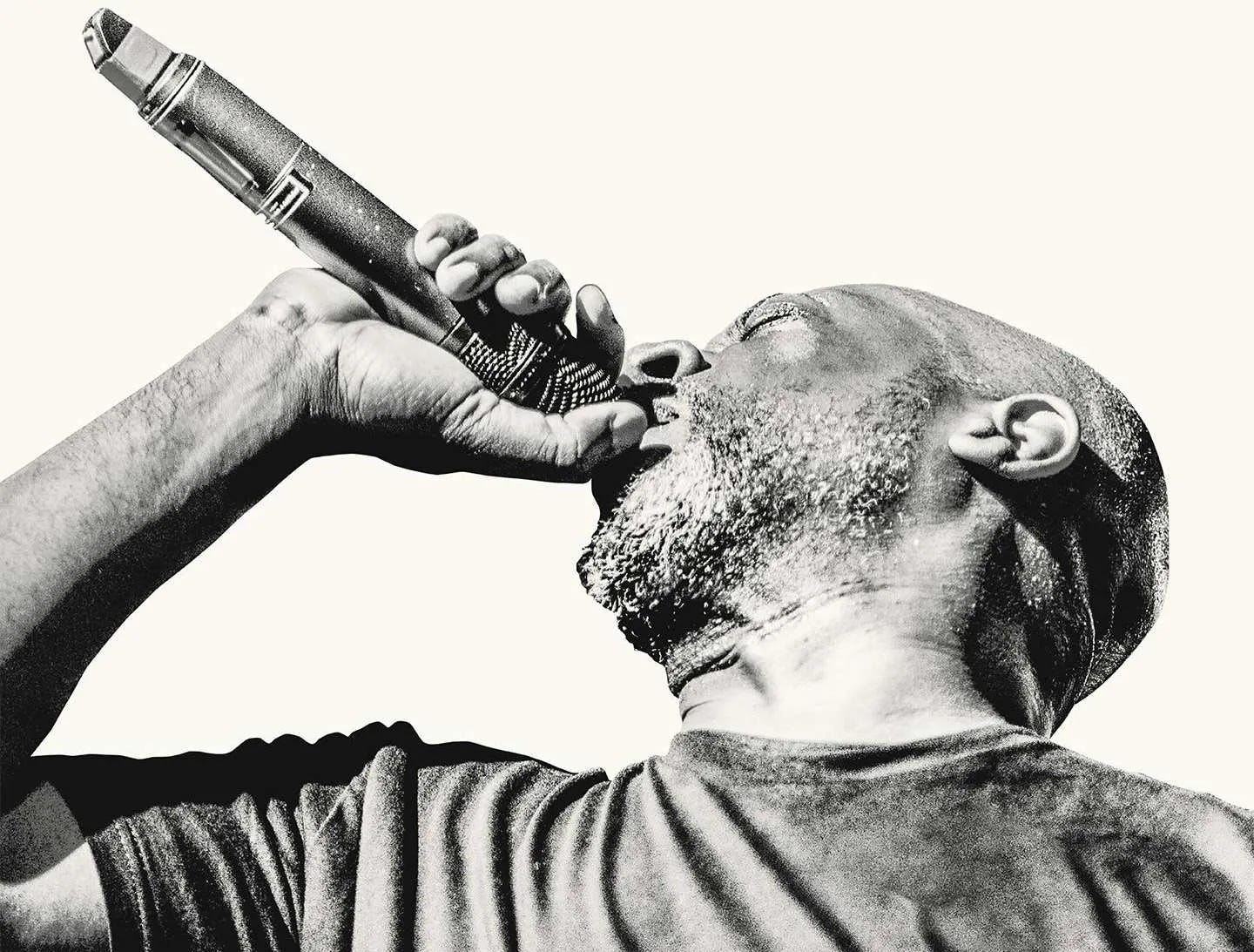
Some voices don’t take long to introduce themselves. MC Conrad’s is one of them, and on “Golden Girl” it brings some of the most romantic writing in drum & bass: warm and delivered with complete conviction. Supporting it is a punchy drum break driving the track. It’s soulful, nostalgic and very hard not to smile at.
Makoto, the Tokyo-born producer and DJ, made it with the late MC Conrad, known as LTJ Bukem’s MC and stage partner. The re-recorded version, first released digitally in 2025, has now been pressed on vinyl in a very limited run. Its launch at Planet Wax on 14 November makes this a good moment to revisit the original and the versions that followed.
Makoto, MC Conrad and the making of “Golden Girl”
Makoto grew up in Tokyo with jazz and classical music at home. By his own account he fell for Beethoven at around six, was later moved by Ryuichi Sakamoto’s film soundtracks, and at fifteen discovered acid jazz through United Future Organization. He began running parties so he could DJ, playing acid jazz, rare groove soul and Brazilian records. Drum & bass found him at a Gilles Peterson night, where Goldie’s “Inner City Life” hooked him. He started producing in 1996 and sent demos to around ten labels; only LTJ Bukem replied, he asked for changes to the beats, pace and arrangement. Makoto made them, and was rewarded with a Good Looking Records contract.
Conrad arrived from a different direction. He grew up singing in church choirs, which gave him a grasp of scales and harmony, then moved from UK hip-hop into the rave scene as an MC. His long partnership with LTJ Bukem made him one of the most recognisable voices in drum & bass. He was also a songwriter and producer, and by 2021 he was running his own label, Resonance. This is the reason why “Golden Girl” should be heard as a collaboration between two musicians, not a Makoto instrumental with a vocal added afterwards.
Conrad’s account of the song’s beginnings that he gave to UKF in 2021 is the best part of the story. He and Makoto were producing for an album that sadly never came to be, and he didn’t want to sing on this one. The vocal began as a melody that kept coming into his head on a walk into town. He hummed it to Makoto, who eventually talked him into singing it, and it “kinda wrote itself as a song”.
The original came out on Good Looking Records in 2004 - 2005.
Inside the original
What makes “Golden Girl” stay with you is Conrad’s performance. The writing is warm and open, full of affection and longing, and his delivery makes it believable. There is also a musical subtlety. Conrad told UKF that he and Makoto never understood why one note in the melody felt unconventional, until Cleveland Watkiss pointed out, years later, that it is the resolve. It closes the phrase and restarts the next bar at once, which gives the melody its haunting momentum. The drum break is a punchy Amen loop, but it never competes with the voice.
Together, that balance is what makes it a masterpiece. The keys and strings bring the warmth, and Makoto, who plays the keys on his own records, keeps them melodic rather than ornamental. The nostalgia comes from the melody and the voice, not from any retro gloss, and the break keeps the track physical. It can feel romantic, warm and still be a drum & bass record you can move to, which is why it still resonates in 2026.
Re-recording “Golden Girl”
Makoto explained that he and Conrad had often discussed re-recording “Golden Girl”, but Conrad passed away before they could finish it together. He had recorded a new vocal in August 2019, leaving Makoto with the performance around which he rebuilt the track.
“I went all in, rebuilding and reconstructing the track around that vocal. It was something I felt I had to do to honour him and help keep his legacy alive.”
— Makoto
The new recording includes extra vocal parts Conrad would perform live. Makoto describes his voice as deeper and more meaningful here, bringing something new to the track he says was always special to them both.
Makoto’s remix
Makoto’s remix, released digitally on 9 October 2025, takes a different approach to “Golden Girl”. The piano moves to the front and it’s the more melodic of the two versions. That is not to say the original lacks melody; the difference is in how the remix presents it.
Towards the end, Makoto brings in a new verse from Conrad. He told UKF that hearing The Pharcyde harmonise and MC at the same time in the early 1990s inspired his approach, and in this version we get to hear that range within a single track.
Lenzman’s VIP Remix
Lenzman reworks the bassline and adds new drum layers to produce a version that doesn’t hit quite as hard as the original. The break is slightly softer, and it feels more like liquid drum & bass.
This version was circulating well before Makoto uploaded it in 2014. It appeared in Lenzman’s UKF podcast in 2012, and Random Movement played it in his Different Drumz mix the year after.
For years listeners were asking Makoto if it would ever be released and his response has always been “Unfortunately I have to say no for now.”
In 2026, listeners are still asking where they can get their hands on a copy. It’s a sign of how strongly people have held on to a version that has only lived on SoundCloud and in the hands of a select group of DJs for more than a decade.
On vinyl
The vinyl edition from Planet Wax features the re-recorded version with Makoto’s remix on the flip. It’s officially licensed from the MC Conrad Foundation, and its launch event on 14 November was dedicated to Conrad.
What this record lets us hear is everything lining up: the intimacy of Conrad’s vocal and the warmth and energy of Makoto’s production. The original, Lenzman’s VIP Remix, the re-recording and Makoto’s remix each offer a different take on a record that has stood the test of time. Hear the re-recording on Bandcamp or find it on vinyl at Planet Wax.