

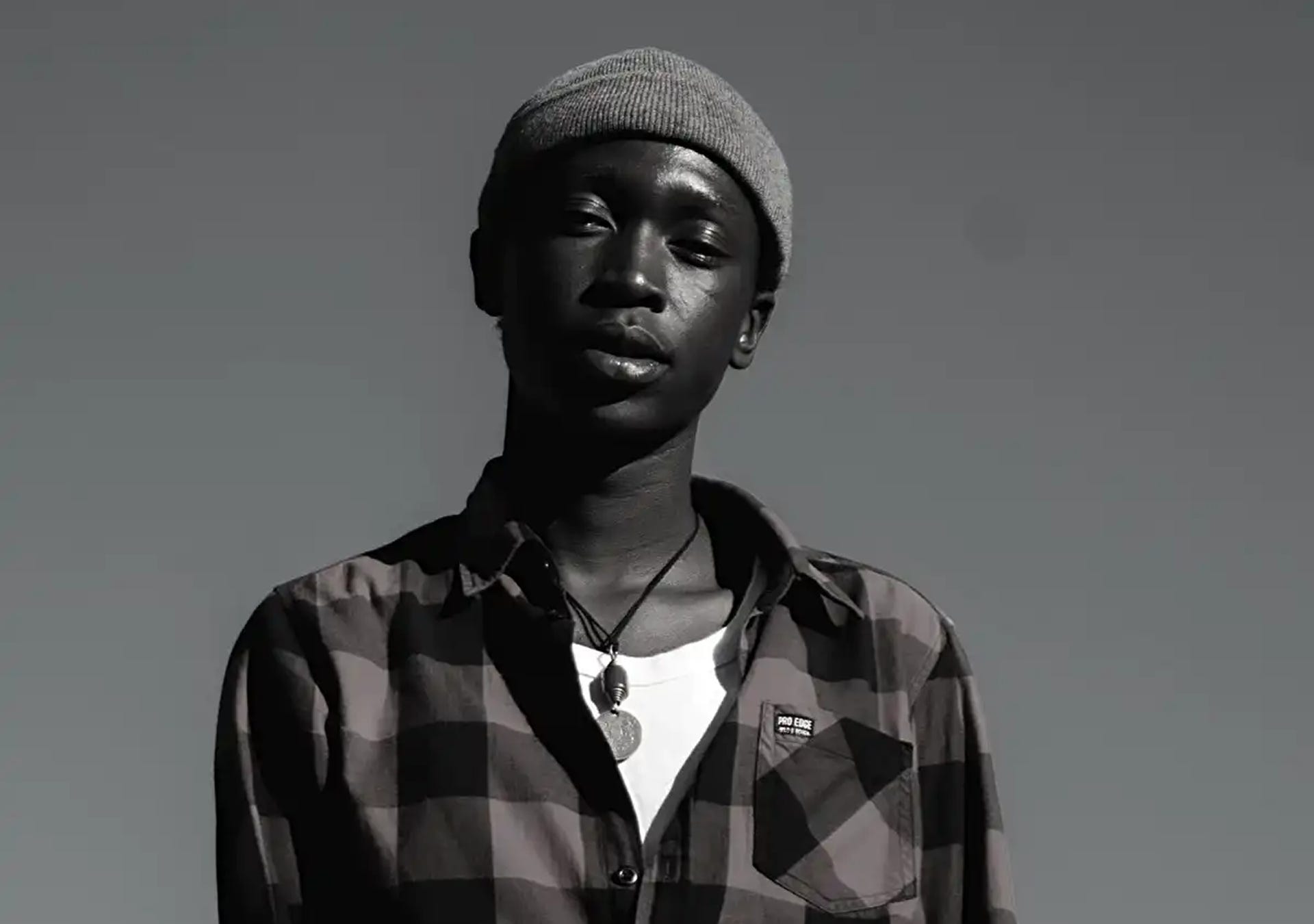
Born and raised in Nairobi, Kenya, Beng’s creative life has been dedicated to a simple mission: to help foster and sustain electronic music in his region.
There is something unusually complete about the way Beng works. Music, performance, visual direction, technical production, and events all feed into the same idea: creating something that reflects the people around him and gives them something they can recognise as their own.
With few routes into the world he wanted to be part of, Rabudi learned by doing: organising house parties, sourcing equipment, and developing event concepts before gradually taking responsibility for different parts of the experience, including the sound, the visuals, the logistics, the programming, the atmosphere and the small details that determine how a night feels to those that choose to indulge.
Over time, that self-taught approach grew into something much bigger than finding his place in electronic music. Rabudi began using everything he had learned to help support culture and opportunity.
But the more you speak with him, the clearer it becomes that music is only the starting point. He thinks about how it can be used to bring people together, create a sense of belonging, and help people see themselves differently.
For Beng, the event is not just a night out. It is a mirror.
“Self-hate is something I really want you to talk about. I realised that as an African, I inherently have a lot of self-hate.”
It is a striking admission, but also the idea that brings many of the different parts of his work together. For Rabudi, questions of identity, belonging, and how African people see themselves are inseparable from the culture he wants to create.
This is at the centre of our conversation. Not as a neat slogan or an easy political message, but as something he has been trying to untangle through sound, design, fashion, photography, hospitality and community.
Electronic music is the vehicle, but the ambition behind it runs deeper: to encourage people to recognise value in where they come from, how they look, and who they are.
“I do my best to foster a fresh identity that’s not based off of self-hate. I’d hope to remind folks, anyone of melanin, to always love themselves for who they really are. So as to encourage the pursuit of contentment.”
Growing Up Around the Edge of Nightlife
Rabudi was born and raised in Nairobi. His childhood was defined by school, family structure, and a distance from the nightlife that existed around him.
“Nairobi was just a bit of a blur. The stay in school thing is really intense, so everything about your life is wrapped around your academic life.”
Creative interests were not treated as being as important as academic ones. Talent in football, swimming, drama, or music would be secondary to the expectation to focus on school.
“We had a lot of that extra talent, but it was: no, don’t use it, just focus on school stuff.”
As a kid, he says he didn’t fully understand Nairobi’s nightlife. His first experience of being out in the city at night was not at a club or a rave, but a drive with a relative during a family gathering.
“We had the chance to step outside and we went for a drive. It was my first time outside at night as a human being ever.”
That distance made nightlife feel less like something normal and more like a mystery. When he eventually started going out, it was through friends, sleepovers, and the small windows of freedom that came with being around less restrictive households.
“I struggled with the night out initially, but I guess at some point I just took that initiative to say I want to explore the nightlife, I want to know about it.”
Discovering Electronic Music From a Distance
Before he became involved in nightlife directly, electronic music arrived through fragments: radio, television, downloads, posters, whatever access was available.
“I got into electronic music when I was like 13,14. At that time I had no methodology of how to be involved with it. It was just typical love as a kid.”
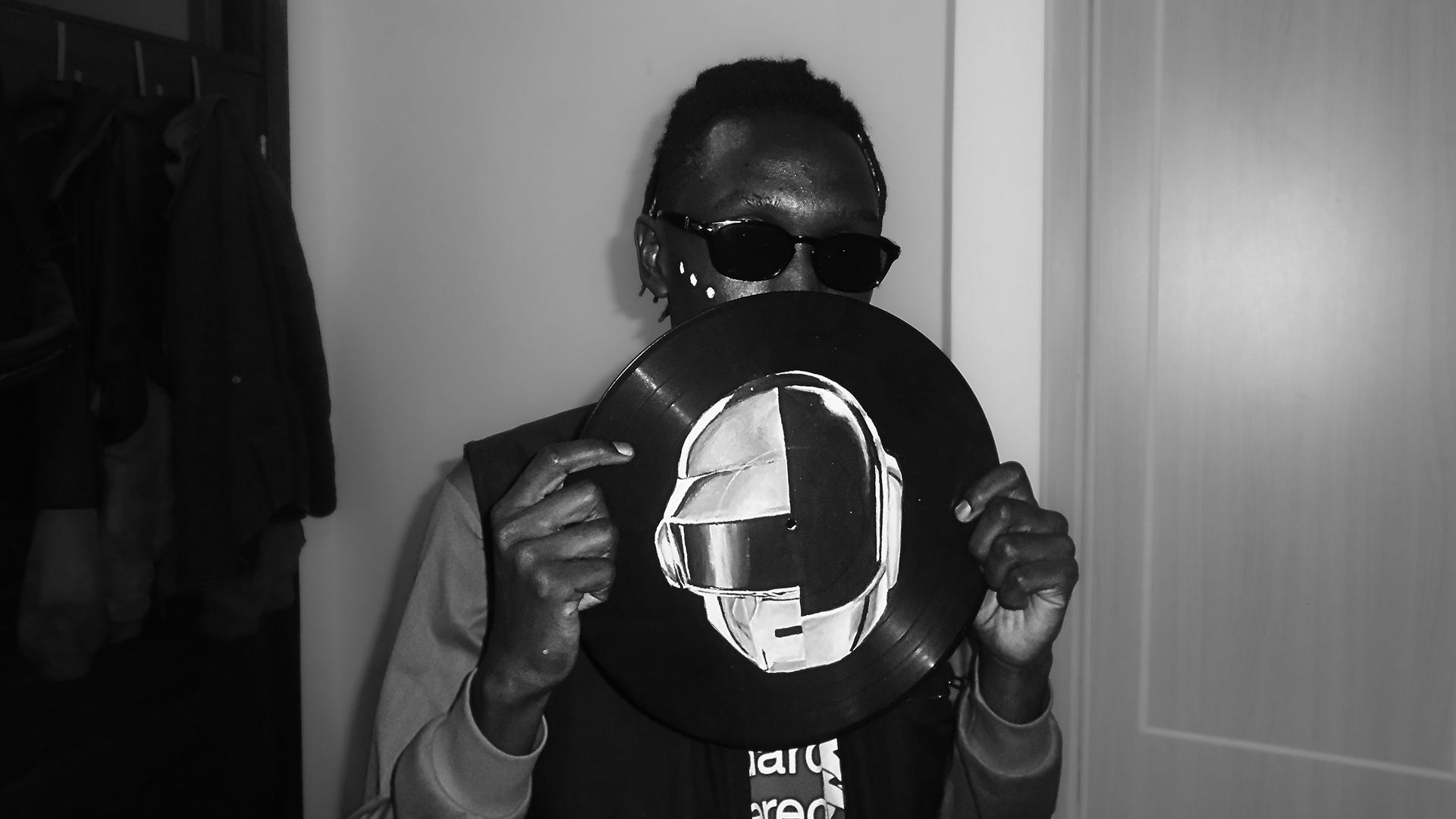
The first artist to pull him in was will.i.am through The Black Eyed Peas, followed by Calvin Harris, Deadmau5 and Skrillex. What interested him was not just the sound, but the world around it: the production, the technology, the visuals, the scale, the infrastructure.
Deadmau5 opened his eyes to the relationship between sound and visual identity: the mask, album concepts, and how a symbol could become part of the way an artist was understood. Skrillex opened up another side of it, DJing as performance, storytelling, and movement.
“What got me into DJing was Skrillex. The dubstep was cool, he had a few bangs, but his DJing is underrated. He’s a mad DJ.”
From there, Rabudi went deeper: into history, genre, production, and the mechanics of how electronic music travels.
“I definitely went deeper and deeper. I am a history buff, I got into the history side of it.”
That historical instinct still shapes how he thinks about sound. He talks about deep house, disco, Detroit, Chicago, UK electronic music, South African music, Kwaito, Benga, and other African-influenced electronic music as connected, not isolated. For him, genre is not a set of boxes. It is a map of movement.
“Music is a beautiful thing that allows people to have a middle ground together.”
— Beng
Booking Himself Into the Room
Beng’s route into the industry was practical before it was glamorous.
“I’ve always just had to book myself, really.”
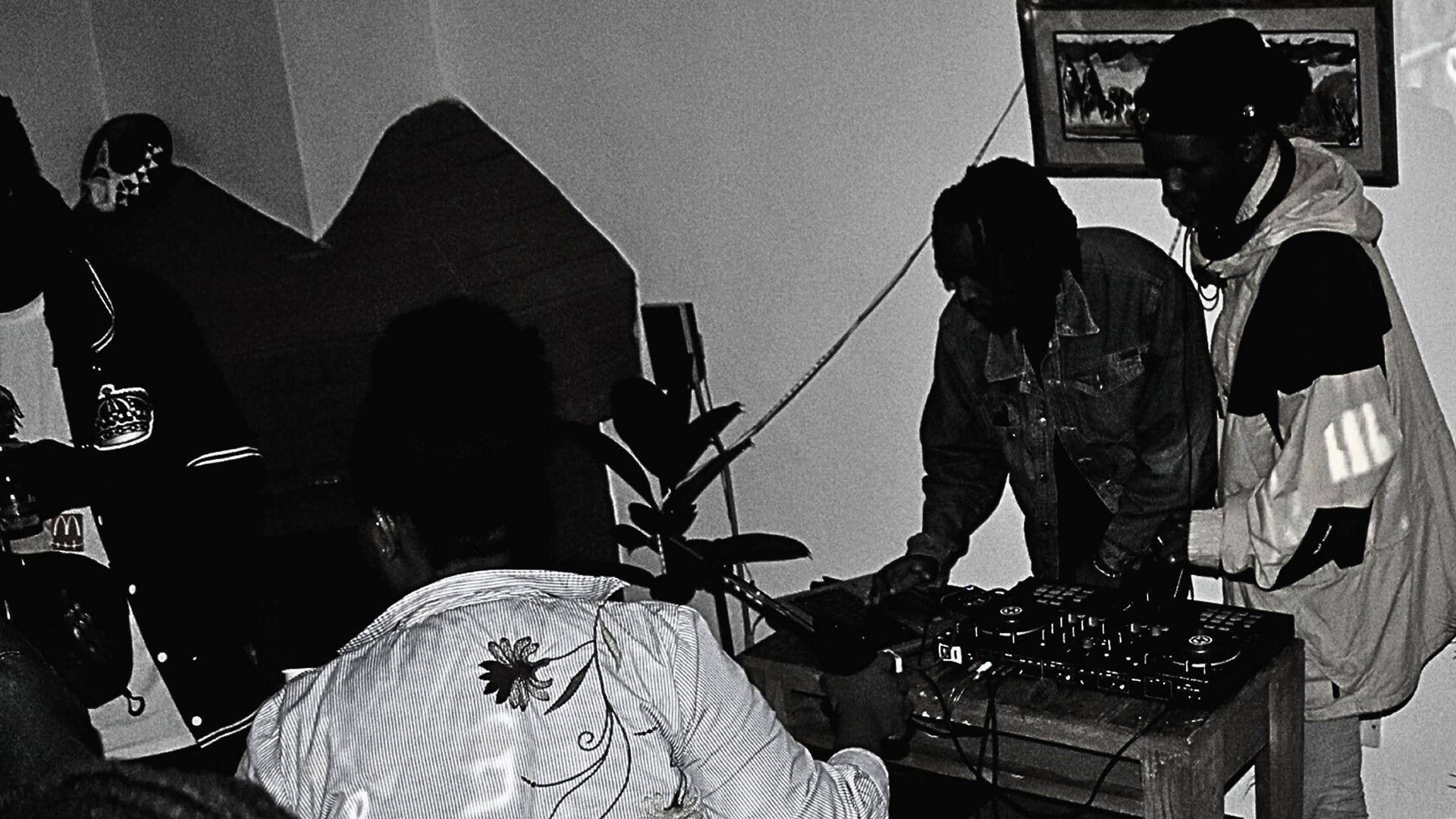
Before residencies, larger concepts, wider recognition, and scrutiny, there were house parties, borrowed equipment, and the desire to simply be involved. In high school, he helped organise the sound system for a house party, trying to pull together a mic, speakers and a controller. It didn’t go perfectly, but the instinct was there.
“That was the first thing I did. I just wanted to be involved, wanted to help.”
That instinct to help, fix, connect and organise became part of the foundation for everything that followed. He was not only trying to become a DJ; he was learning how events happen: the equipment, the venue, acquisition, logistics, the lot.
A close friend was also key to that early development. Beng credits him with helping shape his understanding of event concepts and the importance of creating a room with intention.
“Right after we finished high school, my friend curated a gig. It was really a great experience being included and involved in the process.”
He is careful not to overstate his role in those early ideas. What mattered was the opportunity to observe, participate, and learn.
“I definitely learned a lot on the job. It really helped me gain perspective.”
This pattern of researching, observing, making mistakes, and then building again would become invaluable to the way he developed his own work.
How do I make it easier for another human being to be able to co-exist?
— Beng
Building Ideas, Not Just Events
When Rabudi talks about events, he doesn’t speak in the language of hype. He talks about safety, hospitality, comfort, arrival, intention, and emotion. He thinks about how people receive an invitation. How they interpret a ticket price, whether the environment feels intimidating, whether someone can afford to be there, and whether he’s giving them a legitimate reason to stay.
“I always try to put myself in someone else’s shoes. If I’m at home with my friends or partner and I’m thinking of going out. Before I buy a ticket, I ask myself why, what’s the point?”
That question, why? is central to so much of his work. Sometimes the answer is money, geography, perception, or the feeling that an event was not designed for you in the first place. He speaks about keeping tickets accessible not as a marketing trick, but as a way of reducing friction between classes.
“I always charge 500 Kenya shillings (£3) for a basic ticket no matter how big the function is.”
He compares his approach to selling quality lemonade in the neighbourhood as a kid.
“There is always competition in any kind of business. The only problem is, sometimes we get so caught up in competition, the quality of the product suffers. Soon it all becomes a cash grab type thing. The art, the quality of service and the customer/buyer relationship completely deteriorates.”
For Rabudi, the aim is not simply to sell tickets. It is to shift expectations and create the conditions for something more meaningful: expression, dance, friendship, creativity, discovery, and a sense of belonging.
That attention to how people experience his work is also tied closely to the way he separates different parts of himself.
“I point the mirror at myself and everyone around me… What I’m always trying to say is: we’re cool too, there’s no need to play pretend.”
— Beng
The Person Behind Beng
The distinction between Rabudi and Beng goes deeper than a stage name.
Beng is the artist, the DJ, the producer, and the person on stage. Rabudi is at the back end: the sound guy, the one doing the lights, the one handling logistics, acquisition, and energy. They are not separate identities, but different states of mind within the same person.
“The dj/producer is Beng, that’s me making music and on-stage performances. I however don’t like being performative when I’m not in that setting. Outside of that I’m Rabudi, quiet and actually really shy at times.”
“While planning things, being pragmatic and observant, I’m Rabudi. Always working to stay steps ahead, really sensitive to information and intuition. But once things get going, when the pressure is on and it’s time to step up, I’m Beng.”
That shift is partly creative, partly professional and partly protective. He speaks openly about having to grow up quickly, about learning to be careful with people and about carrying a sense of responsibility from a young age.
As Rabudi, he describes himself as sensitive, private and deeply invested in people. As Beng, he knows the stakes are high and that leadership sometimes needs a harder edge.
“As Rabudi, I’m sensitive and I care too much. I hate that I do, I sometimes really wish I didn’t, I’d be rich. But I guess that’s how the universe works, checks and balances.”
That honesty gives the care running through his work a clearer context. It does not come from naivety. It comes from someone who understands that sensitivity can leave you exposed, but has chosen not to abandon it.
Promoting Self-Love through Art Direction
The more we speak, the clearer it becomes that Rabudi’s visual direction is not decorative. It is another expression of the same questions around identity and self-acceptance that run through the core of his work.
He talks about texture, lighting, tone, colour palettes, and visual quality as part of an attempt to challenge how Africans are seen by others, and also by themselves.
“I point the mirror at myself and everyone around me. The suburb kids, those from out of town, those that are struggling to make ends meet. The everyday person. Especially those of us that are in the lower middle-class section of society, where I’m from, we are the majority. What I’m always trying to say is: we’re cool too, there’s no need to play pretend.”
For him, that means refusing the idea that beauty only exists in polished, lush, or aspirational settings.
“Just because I don’t live in the affluent parts of town, doesn’t mean I’m anything less.”
He talks about wanting people to feel comfortable taking pictures where they live, not needing to travel somewhere more polished to feel presentable.
“Why not just take it where you live? Do exactly what you need to do where you’re from with what you have.”
It sounds like a simple question. In Rabudi’s work, it becomes an entire visual philosophy.
That thinking feeds directly into his fashion, staging, visual language, and colour choices. He talks about jungle green, mud brown, charcoal black, contrast, and how an environment can either flatten or enhance someone’s image.
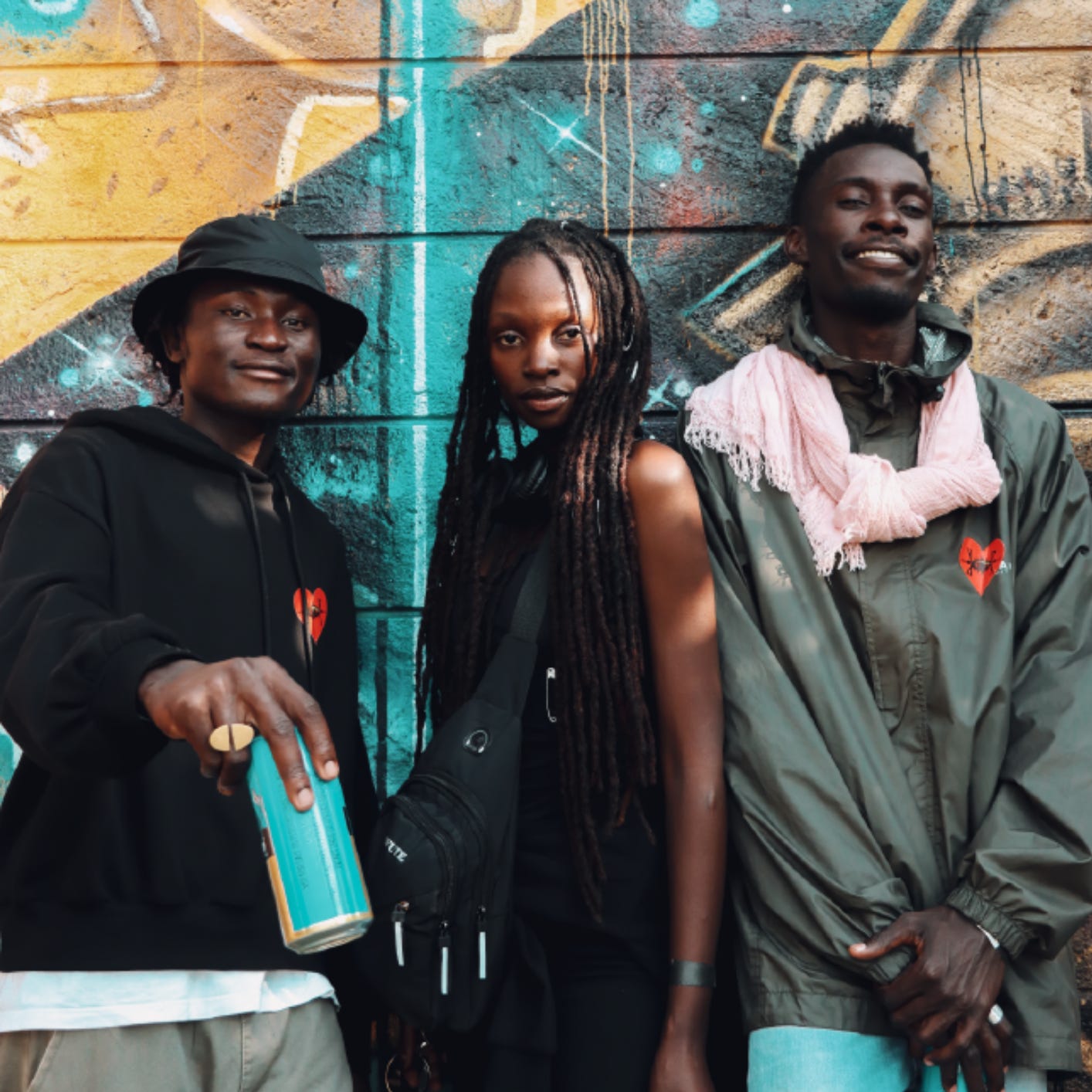
“In my opinion, it’s not enough to just settle and rely on aesthetics when you’re trying to start something worthwhile. It’s a collective, collective bits and pieces of information and emotion that then create an art direction.”
The point is not simply to make something look good. It is to create the conditions for people to see themselves differently.
“I think, as Kenyans, we’re not so used to being complimented, we’re used to being judged and criticised.”
— Beng
Beyond Alcohol, Toward Culture
Rabudi is also conscious of what nightlife often becomes when it’s fuelled by alcohol. He resists that model.
“I try not to facilitate drinking and drugs. I always fight that narrative, it’s really hard to do so however. It’s no mystery that the nightlife’s economy is so closely tied to a beverage or substance of choice.”
Instead, he imagines a wider ecosystem around the event: food vendors, coffee and tea connoisseurs, merchandise, flowers, beads, art, fashion. An event that supports micro-economies and gives local creativity a place to exist.
“I’d rather people come and eat food. I’d rather have a rep for having great food at the concert, beautiful jewellery, perfumes that smell good, someone selling custom made skateboards over there, really cool t-shirts, or beautiful cards with sweet messages and souvenirs. You know, that gift shop feeling.”
This is where his work moves from curation into community-building. The event becomes an environment where music, fashion, design and local creativity reinforce each other.
“We have passion in Nairobi. I kind of have to pick us up, like we f*ck with our fashion, it’s so serious.”
— Beng
It is another expression of the same idea running through Rabudi’s work: that people should be able to enter an event and find more than just something to drink. There should be culture, creativity, and a feeling that the event belongs to the people who attend.
“Creating a consistent environment for conversations and honest connections with one another is a big job. We shouldn’t be too complacent about it.”
HI8US, Taking a Break From Normality
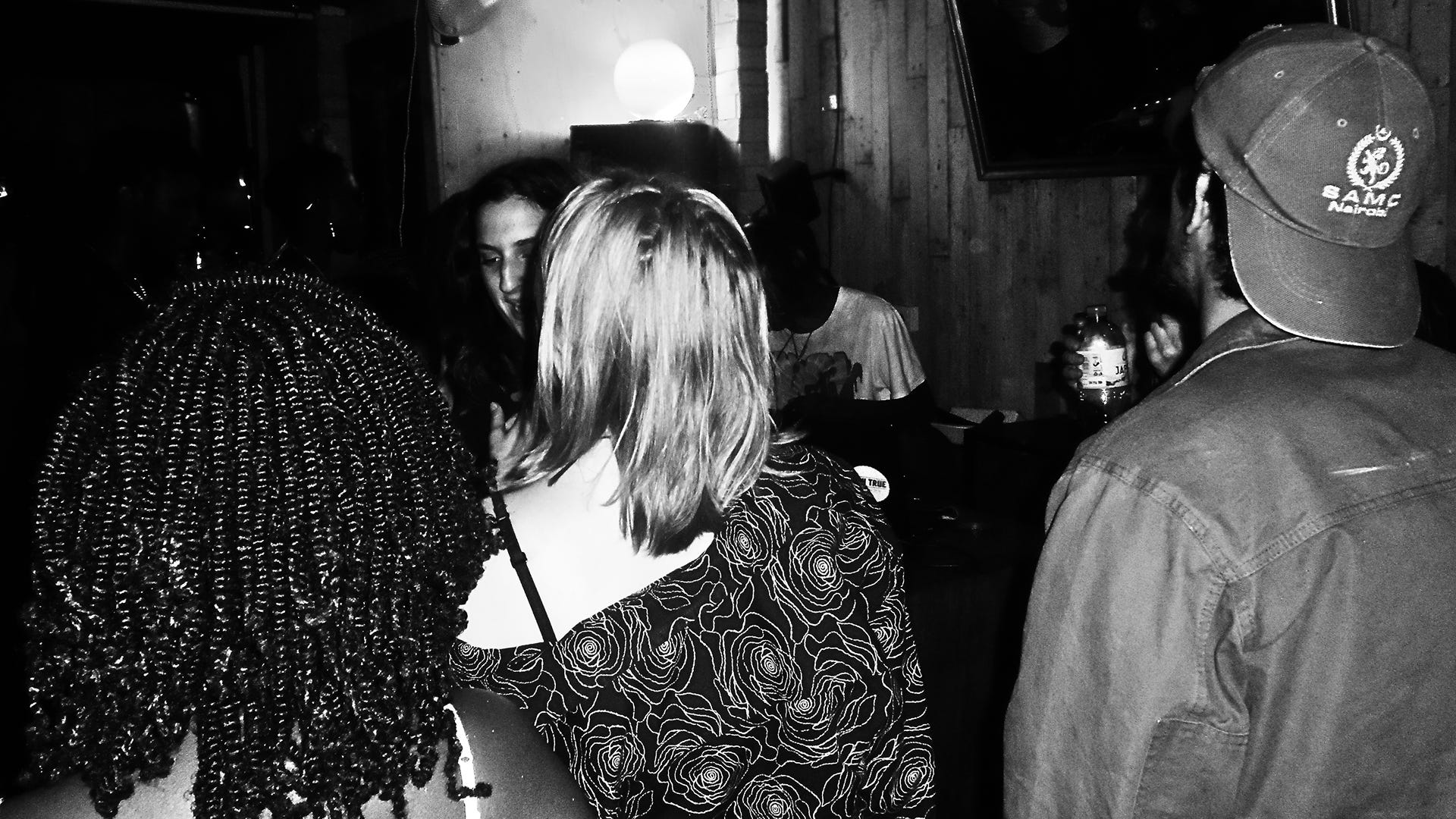
HI8US is the concept that ties many of these ideas together, although Rabudi is deliberately careful about revealing too much about it, simply because, as he puts it, it is currently on hiatus. Its full story is not the focus here, but he does open up about the thinking behind it.
“The sound that I followed definitely helped me come up with HI8US as a concept. Because when I say I’m on hiatus, it means I’m taking a break. I’m taking a break from the norm.”
At its genesis, HI8US was a secondary stage within a larger event, a hidden, alternative room inside a more mainstream environment. It was physically separate, slightly unexpected, and based around discovery.
“I essentially was just trying to create an alternative realm in a mainstream type environment.”
That phrase could describe much of Rabudi’s work. He is not necessarily trying to reject the mainstream. He is trying to build another room inside it. Somewhere the rules change.
Grassroots Without Borders
Towards the end of our conversation, Rabudi talks about cross-continental collaboration.
“It’s definitely a long-term plan for HI8US.”
At its simplest, the idea is about grassroots communities in different parts of the world supporting one another.
For him, collaboration is not just about booking artists from other countries. It’s about sharing resources, ideas, visual language, sound, context, and methodology between people working at a similar level in different parts of the world.
“I’m happy to be in this interview to talk about it, because you are in fact the representation of the grassroots over there and I’m a representation of the grassroots over here.”
He connects this to African-influenced electronic music: the accents of Kwaito, Benga, Afrobeat, and other local forms feeding into new electronic expressions across the continent and diaspora. When he speaks about FāëM, the Lagos duo we recently featured, he recognises a parallel mission.
“It’s the same mission, but different circumstances, so therefore different methodologies.”
For Rabudi, these connections could allow artists and organisers to exchange ideas, learn from different approaches, and find new environments in which to experiment. The value is not in international visibility; it is the possibility of building relationships between cultures that have different circumstances but often share similar ambitions.
That recognition matters. Beng is not looking for global validation in the traditional sense. He is looking for opportunity: opportunity to test, fail, refine, travel, exchange, and grow without being forced immediately into high-pressure, commercialised environments.
“Grassroot is the most realistic environment where you can do anything, that’s where you know if something’s actually worth doing or not.”
For artists working outside dominant industry centres, access to this kind of opportunity can determine whether a promising idea dies early or has the time to become something substantial.
“We need more geographical space, because monopolies have successfully starved local creative continuity.”
It is one of the few moments where Rabudi allows himself to speak directly about the limitations around him, but even then, the focus returns to building, not complaint.
“I don’t want to keep trying, I want to actually do it. If I fail, that’s okay, because I’ll have learnt an actual real lesson.”
— Beng
Electronic Music as a Vehicle
For all the detail in Rabudi’s work: the lighting, the art, the curation, the colour, the vendors, the ticket, the DJs and producers he works with, the centre is surprisingly simple.
Love.
Not in a sentimental sense entirely, but more as a practice. As a way of treating people, a way of designing an event, and a way of dealing with inherited shame.
“For me, electronic music is a vehicle. A night out, music, art, is a vehicle, but the point is to spread love from within.”
That love, he says, should move outward.
“That love can also be transmitted from one person to the next if we decide to treat each other better. The music is really just a way to communicate that.”
In that sense, Rabudi Beng’s work is not only about Nairobi, electronic music, or just nightlife. It is about what happens when people actively choose to preserve integrity. To arrive as they are. To dress how they want. To hear something unfamiliar. To feel seen without needing to perform wealth, polish, or fit into someone else’s idea of success.
“Africans are so much fun. You don’t need to be drunk to have fun around Africans, we’re great company.”
He highlights rhythm, colour, beauty, movement, the things he believes are already there, waiting to be recognised.
“We know how to dance, every African can dance to a great extent, every African has a natural sense of rhythm and that’s a fact. We all know what rhythm feels like, looks like and sounds like.”
Beng’s work offers us another way of thinking about what nightlife can be. It does not always have to mean making things bigger, louder, or more exclusive.
Sometimes it is about making a space feel like home. Sometimes it is about seeing yourself clearly, maybe for the first time, and realising there was never anything wrong with where you came from or where you are.
“Despite the self-hate thing, somewhere inside, I know that I really like myself. It’s hard to show it and be that person 365 for plenty of unfortunate reasons. But deep down, I know I’m cool as f*ck.”
That is the message he wants to pass on.
Not escapism. Not image. Not a perfect night.
A mirror.
A sound system.
A room full of people choosing to love themselves honestly.