

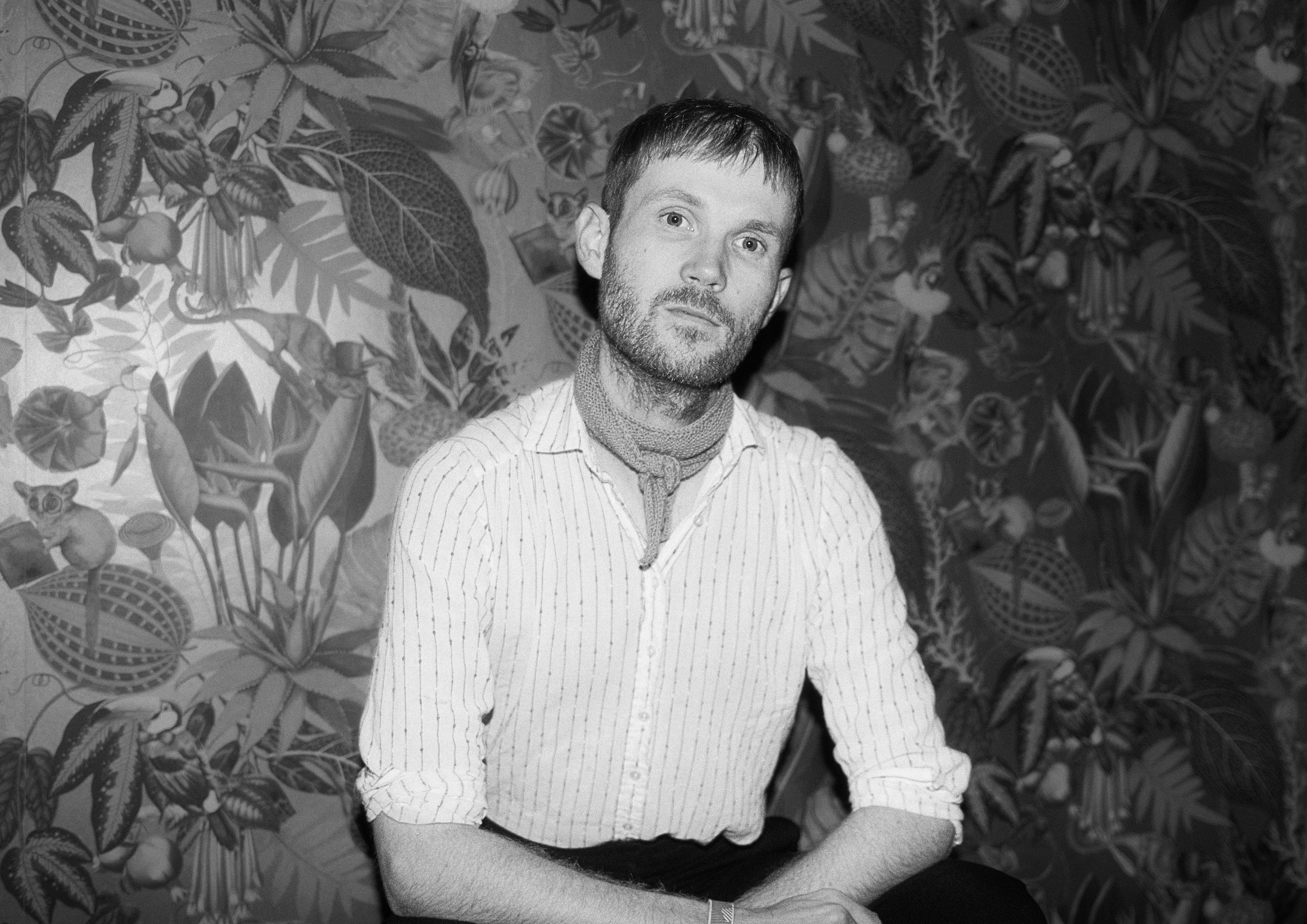
David Bay started writing songs at thirteen, in an indie band called Pool, years before anyone outside Hamburg knew his name as a solo artist. That’s worth holding onto going into this interview, because most of how he works now traces back to it: the instinct for a song’s shape over its function, and the importance he places on lyrics to actually say something.
Since going solo, David has built a catalogue on Toy Tonics that isn’t easy to describe. His Mixed Signals EP leaned into 80s-tinted indie disco; and released earlier this year, his Jeopardy EP gets billed as “sun-drenched” and positive, which holds up right until you actually sit with the lyrics. He plays almost everything you hear on his records himself: bass, guitar, keys, and often the vocal. He also runs his own label, Zissou Records, with best friend and fellow producer DJ Dreams. Before any of that, he spent time working at EGO, Solomun and Diynamic music’s club in Hamburg, which he credits with shaping how he thinks about nightlife in the first place.
We caught up with him to talk about songwriting, discipline, stage fright, and the exact moment a track is actually finished; spoiler: it’s never obvious.
Before Going Solo
Before you started releasing under your own name, what did your relationship with music look like, and what first pulled you towards producing?
I used to be (and still am) in an indie band called Pool. We started writing music together when we were just thirteen years old. Producing the demos for our songs took me to producing demos for other artists, and at some point I just wanted to have a project where I could make all the decisions. That’s how I started my solo project.
“I like to look for that place between organic and electronic.”
— David Bay
You started out in a band before developing your own solo project. How did that experience shape the way you approach electronic music now?
Because I grew up writing songs, I think I’ll always be a song-driven person. I look for the story music is telling, the journey of a track. And being in a band taught me a base level of all the instruments — so whenever it makes sense, I’ll play bass, guitars, piano, synths, percussion, and also sing on my music. I like to look for that place between organic and electronic.
What inspired you to begin releasing music as a solo artist, and how did that shift start to take shape?
When doing music I always search for a certain vibe. Looking back, I think I really had a feeling I wanted to chase, and there was no other outlet for me to do it. So I just started writing music… it took me a few years from the day i starting producing music to the day i actually released it.
Instinct Over Structure
“The best stuff always happens when you’re not aware of it.”
— David Bay
How do you balance the structure of a song with the energy and function of club music?
Every track is different, and I feel it’s about listening to what your gut is telling you. Some songs need a big break and cheesy elements, and some just wanna roll — I think it’s more fun not to think about it. The best stuff always happens when you’re not aware of it.
What draws you to bringing organic instruments like bass, guitar and keys into your productions?
I just love to play. There’s nothing more fun than having a lot of time to just play in the studio, jamming on a loop until everything falls into place. Doing a song without touching my instruments would feel really weird to me.
Your sound feels warm and groove-led without losing its emotional side. What usually guides that balance for you?
I think especially in dance music, lyrics don’t get enough attention. People have been singing “take me high baby” for decades now… nothing wrong with that, but when I write I’m trying to find new concepts for songs, or strong words that already contain an emotion in themselves. An energetic and funky song with melancholic lyrics — I love these kinds of things!
Craft and Discipline
How has producing for other artists shaped the way you approach your own music?
It really helped me focus on the essential stuff. When I started off, I’d sometimes work on tracks for months, to a point where nobody would hear a difference anymore. Doing productions for others got me to be more practical. Moving fast doesn’t mean you’re lazy, it mostly helps you actually capture a moment.
“Letting go of your song, the moment right before it’s out of your hands — that’s probably the hardest part.”
— David Bay
When you’re producing, what techniques, plugins or tools do you keep coming back to?
The simple things — we don’t need much, there’s no cheat codes… but one thing I always use is 2A compressors, just for peak reduction, to make everything smooth and still breathy!
What part of the process feels most natural to you, and what part still challenges you the most?
I think everybody has a hard time doing the actual final bounce right, version 25… haha. Letting go of your song, the moment right before it’s out of your hands — that’s probably the hardest part, I think!
Jeopardy EP
Congrats on releasing your EP “Jeopardy” on Toy Tonics. What did you want this project to capture about where you are creatively right now?
Thank you — very happy with how it turned out. My favourite of the EP is “Orbit,” I think it’s a good example of how a track can be funky, sexy and melancholic at the same time. But actually all the tracks are energetic and still bring a different message — sad bangers!
“If you are your true self instead of trying to meet expectations, it will always be the right thing.”
— David Bay
How did the EP come together, and what connected these tracks as one body of work?
I think I made most of them in a period when I wanted to do tracks that sound like the base was an old disco sample from somewhere, but actually I didn’t use a single sample on the entire record.
On “Jeopardy,” the collaboration with Gero brings another voice into your world. How did that track take shape?
We met a while back, and at some point he sent me an idea. I took it from there and we shared ideas back and forth. Super natural process, really fun working with him!
On Stage
What changes when you bring your music into a live performance setting rather than presenting it through a DJ set?
I think when I play live, I’m a lot more vulnerable — which is a good thing. I’ll play all these instruments and sing, and somehow that creates a beautiful connection to the crowd most times. DJing of course also is amazing, it always depends on the setting and what suits the room. But I’m very happy I have both options to express myself!
“I’m an introvert, being in these situations has always been a big confrontation for me.”
— David Bay
How do you approach creating a live show that still carries the looseness and release of a club environment?
There will be no big breaks, all the songs transition into each other. People will get the hypnotic experience of nightlife, with the connection happening at a concert.
What have you learned from touring internationally that you couldn’t have learned in the studio?
I’m an introvert, being in these situations has always been a big confrontation for me. But the more I do it, the more comfortable I get. I’m learning it’s okay to be a calm character and still perform on stages — if you are your true self instead of trying to meet expectations, it will always be the right thing.
Hamburg, Community, and Zissou Records
How has Hamburg shaped your identity as a producer and the way you connect with dance music?
Right after school I worked at EGO, the nightclub of Solomun and Diynamic Music at that time. I’d be there almost every day they were open, and it showed me how nightlife brings people together and creates spaces that are super important. I’m forever grateful for that time!
“it’s super fun to work with others who all love the same kind of music.”
— David Bay
With Zissou Records, what kind of space or platform are you trying to build beyond your own releases?
I run the label with my best friend, DJ Dreams. We love to have upcoming and (possibly also established) producers on the label to show our perspective on house music.
How has running a label changed the way you think about music, community, and the industry?
I think it’s super fun to work with others who all love the same kind of music. It’s amazing to be able to provide a place where people can release their stuff and help them on the journey to doing that.
A big thank you to David Bay for taking the time to speak with us. What comes through most with David is how much of his approach comes down to instinct. Whether he’s jamming on a loop, writing melancholic lyrics over something produced for the dancefloor, or learning to feel comfortable on stage, there’s a sense that the best results come when he stops trying to force them.
Stay connected with David Bay and keep an eye out for his upcoming projects.
↳ Instagram | Spotify | SoundCloud | YouTube | Bandcamp | Website | Zissou Records